
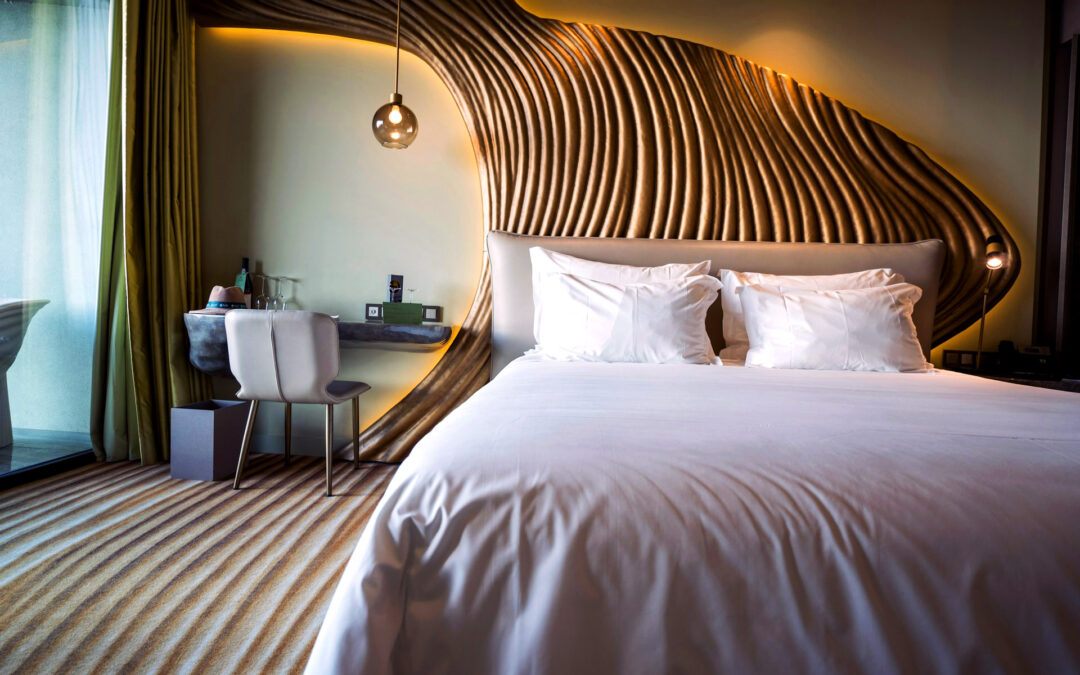
In a well-designed hotel room, restaurant, or meeting space, technology should be available when it is useful without becoming the visual focus of the room. That can be difficult with modern televisions, which take up considerable wall space and may compete with artwork, windows, architectural details, or a carefully planned interior.
A motorized TV lift offers another option. It allows a television to be concealed inside furniture, cabinetry, a ceiling, or another purpose-built enclosure and brought into view when needed.
The appeal is partly visual, but appearance is only one consideration. A properly planned lift can also make a room more flexible, preserve valuable space, and give guests or employees access to a display without requiring it to remain visible all day.
Keeping Hotel Rooms Focused on the View
Hotels often invest heavily in finishes, furnishings, and views, only to place a large black screen at the center of the room. In a compact guest room, the television can dictate the furniture layout. In a scenic suite, it may interfere with a window or become the first thing guests notice when they enter.
A lift installed inside a cabinet or at the foot of the bed allows the television to remain out of sight until a guest wants to use it. This can be particularly effective in suites where the view, artwork, or interior architecture is intended to take visual priority.
The lift also gives designers more freedom. Rather than automatically reserving an entire wall for the television, they can consider other arrangements for seating, storage, artwork, and circulation.
The guest experience, however, depends on execution. Controls should be obvious, movement should be smooth, and the television should stop at a comfortable viewing height. A dramatic mechanism quickly becomes an annoyance if guests cannot operate it without instructions or assistance.
Making Better Use of Small Rooms
Boutique hotels frequently must fit sleeping, working, storage, and entertainment functions into a relatively small footprint. Concealing the television can help, but a TV lift does not create space automatically. The mechanism, screen, wiring, and enclosure still require room.
Before choosing a lift, the project team should confirm:
- The television’s dimensions and weight
- The lift’s required travel distance
- Available space inside or below the enclosure
- Viewing height and angle
- Access to power and data connections
- Ventilation around the equipment
- Maintenance access after installation
Addressing those details early is much easier than modifying completed millwork after the equipment arrives.
Giving Conference Rooms More Flexibility
A display is essential during many meetings, but not every conversation benefits from having a screen dominate the room. In boardrooms and executive meeting spaces, a concealed display can keep attention on the people at the table until technology is needed.
A screen can rise from a credenza or conference table for a presentation, video call, financial review, or product demonstration, then retract afterward. Concealing the display may also help protect it when the room is being cleaned, rearranged, or used for another purpose.
For a commercial installation, cable management and system integration matter as much as the lift itself. Power, video, network, and control cables must move without catching or becoming strained. The lift may also need to work with the room’s audiovisual controls rather than relying on a separate remote that can be misplaced.
Maintaining the Atmosphere in Restaurants and Clubs
Televisions can be useful in restaurants, hotel bars, wineries, lounges, and private clubs, especially during major sporting events or private functions. The rest of the time, permanently visible screens may conflict with the atmosphere the business is trying to create.
A concealed television allows the same space to support different experiences. A private dining room might host a quiet dinner in the afternoon and a presentation that evening. A hotel lounge might preserve its usual appearance while still being able to show a special event.
In these settings, the lift should be positioned so that guests, chairs, tables, and service routes remain clear while it is moving. Noise also matters. A mechanism that sounds acceptable in a busy showroom may be distracting in a quiet dining room.
Supporting Multi-Purpose Commercial Spaces
Banquet halls, training rooms, wedding venues, and event facilities may change configuration several times in one day. A permanently mounted display can limit those arrangements or leave valuable equipment exposed when it is not in use.
A TV lift can help a room shift between meetings, presentations, dining, and social events without requiring staff to repeatedly move or reconnect the display. Hidden screens can also be useful in executive offices, collaboration areas, design studios, and other workspaces where technology is needed periodically rather than continuously.
The installation must be designed for the realities of commercial use. A mechanism that operates several times each day may require a different duty rating than one used occasionally in a private residence. Staff also need a reliable way to stop or manually access the system if an obstruction, power interruption, or maintenance problem occurs.
Planning an Outdoor Installation
Covered patios, resort cabanas, pool areas, and other outdoor hospitality spaces can also incorporate TV lifts, but an indoor mechanism should not simply be placed outdoors.
The lift, television, enclosure, electrical components, and controls must all be appropriate for the environment. The design may need to account for moisture, wind, temperature changes, direct sunlight, drainage, corrosion, and ventilation. Local electrical and building requirements may also affect how the system is installed.
A concealed outdoor television can protect the appearance of a space, but the enclosure and lift must be planned as a complete system rather than as separate products.
What to Consider Before Selecting a TV Lift
The right lift depends on more than screen size. Hotels and businesses should consider how often the system will operate, where it will be installed, how guests or employees will control it, and how technicians will reach it for future service.
Important considerations include:
- Lift direction and available clearance
- Screen size, weight, and mounting pattern
- Operating speed and noise
- Commercial-duty requirements
- Safety and obstruction protection
- Control-system compatibility
- Cable routing
- Ventilation
- Service access
- Warranty and technical support
The lift should also be coordinated with the architect, interior designer, audiovisual integrator, electrician, and millwork fabricator. Even a well-made mechanism can perform poorly if the surrounding cabinet lacks clearance or the wiring was not designed to move with the screen.
A Detail Guests Notice When It Works Well
A TV lift should not be added simply for novelty. Its value comes from solving a real design or operational problem: preserving a view, freeing a wall, supporting multiple room uses, or keeping technology from dominating the space.
When the mechanism is quiet, intuitive, and properly integrated, guests may remember the moment the screen appears. More importantly, they can enjoy a room that works well both with and without the television in view.
From hotel suites and executive offices to restaurants, resorts, and conference facilities, concealed TV systems give designers and business owners another way to balance technology with the character of the space.
To select the right lift and installation for your home or workplace go to https://inca-tvlifts.com.

Recent Comments